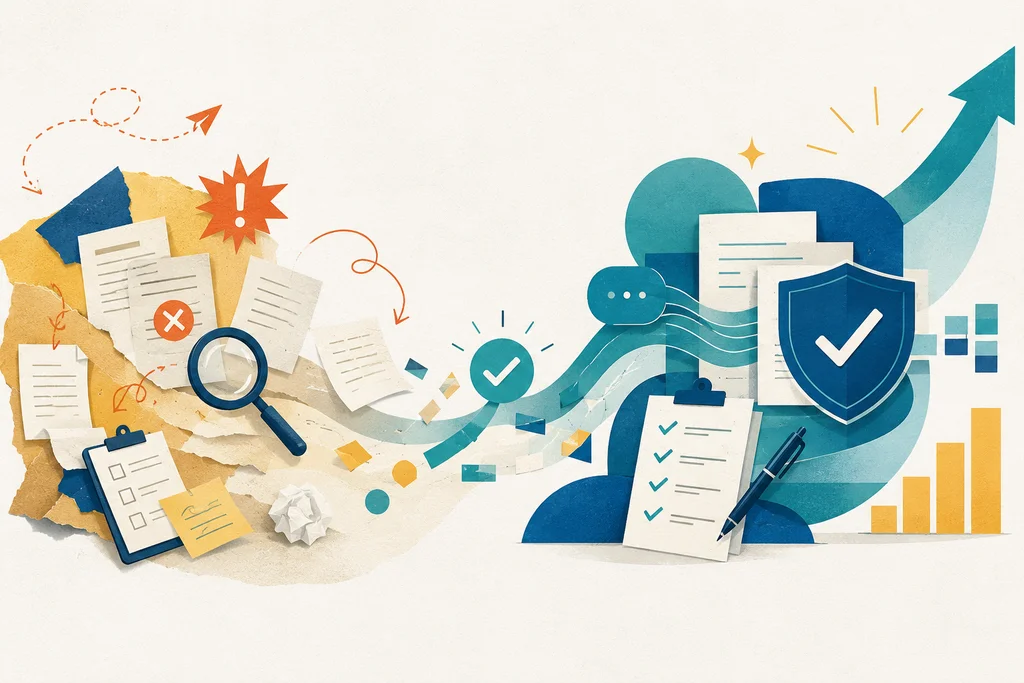
Healthcare has not been short on software for a long time. Most clinics already have systems for intake, scheduling, documentation, billing, eligibility verification, reputation management, analytics, patient communication, and reporting. Over the last few years, AI has added even more tools into the mix.
Tools ranging from an AI medical scribe to a claim scrubber, a chatbot, a denial management platform and even a separate workflow automation system. Individually, many of these tools are genuinely useful. However, when clinics are expected to operate all of them together, that's where things start to break down.
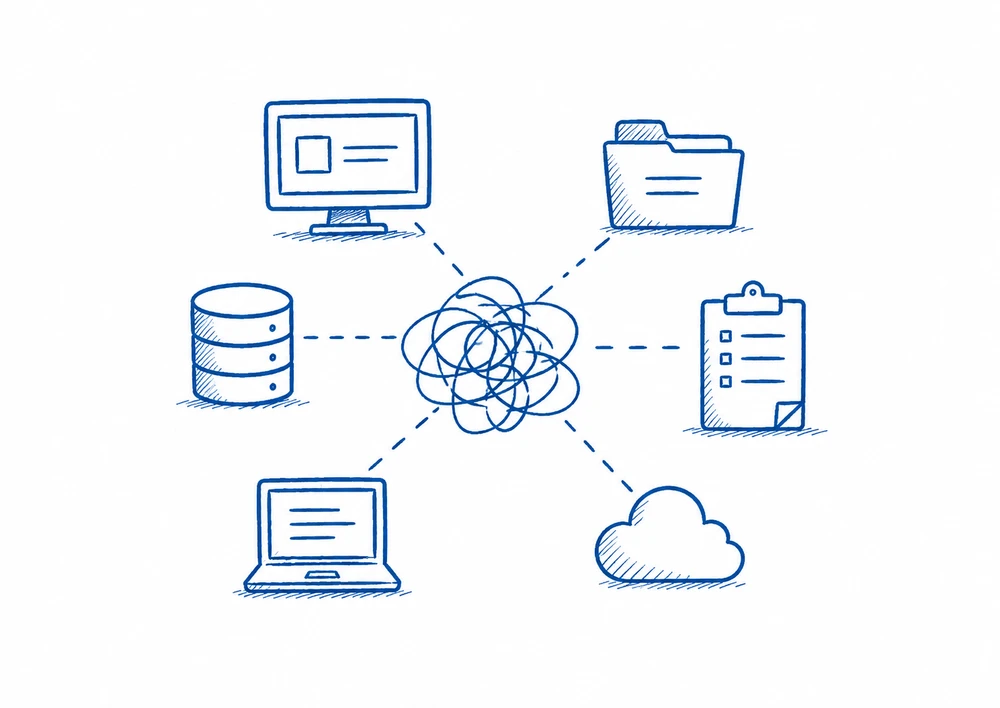
Healthcare does not usually suffer from a lack of software. It suffers from too many disconnected systems.
Point solutions solved one problem and created another
For a while, point solutions made sense. If documentation was painful, clinics added an AI medical scribe. If denials were increasing, they added denial management software. If intake was slow, they implemented patient intake software. Each tool improved one piece of the workflow.
But over time, clinics ended up managing a growing stack of systems that were never really designed to work as one operational layer.
That creates problems that feel familiar to almost every healthcare organization:
- Duplicate data entry
- Inconsistent patient information
- Staff switching between systems all day
- Billing teams correcting issues created upstream
- Providers documenting in one place while coders work in another
- Separate vendors pointing fingers when something breaks
The software technically works but the operations become increasingly harder to manage.
The future is connected workflows, not isolated automation
The next phase of AI in healthcare operations is not about adding more standalone tools. It is about connecting workflows that already depend on each other.
Because in reality:
- Intake affects documentation
- Documentation affects coding
- Coding affects claim submission
- Claim quality affects A/R
- Patient communication affects scheduling and retention
These are actually one continuous process, not separate operational categories which is why disconnected systems eventually hit a ceiling. Even good tools create extra work when information has to be constantly transferred, checked, corrected, or re-entered between platforms.
Clinics do not need ten automations that operate independently. They need infrastructure that allows workflows to move together.
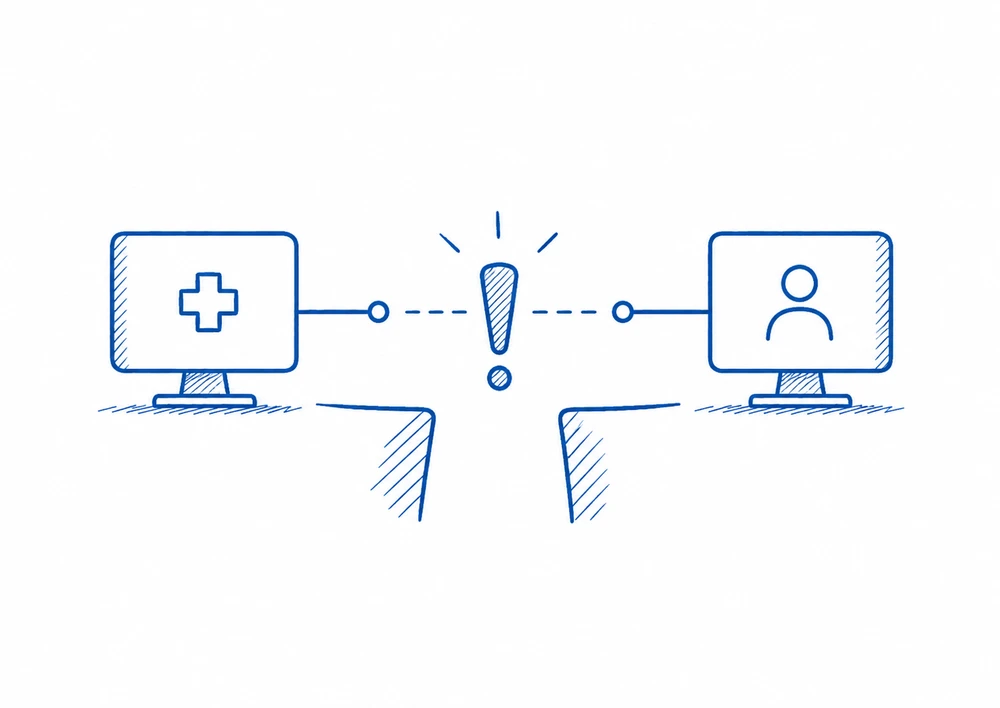
Most operational problems in healthcare happen between systems, not inside them.
Why healthcare AI is moving toward unified platforms
The strongest healthcare AI platforms are starting to look less like individual products and more like operational ecosystems.
Instead of solving one isolated task, they connect the full workflow:
- Digital patient intake
- Real-time eligibility verification
- Ambient clinical documentation
- AI medical coding
- Claim scrubbing and denial prevention
- Medical A/R management
- Patient communication and scheduling
- Reputation management and SEO
That continuity matters because healthcare data is deeply interconnected.
A demographic error during online patient registration can become a denial weeks later. Incomplete documentation during the visit can create coding problems downstream. Delayed patient communication can affect scheduling and retention.
When systems are connected, those issues become easier to catch early.
AI becomes more useful when context carries forward
One of the biggest limitations of point solutions is that they usually operate with incomplete context. For example: a standalone AI scribe may not understand scheduling context, payer requirements, or prior intake information; a billing platform may not understand how documentation was generated; or a marketing tool may not connect patient acquisition to completed visits.
Connected systems carry context forward. For example, Beam can use information from intake, scheduling, documentation, and the EMR together across workflows. That allows:
- Eligibility validation before the visit
- Structured charting tied to appointment type
- Coding support connected directly to documentation
- Claim validation informed by intake and payer data
- More consistent patient communication and follow-up
The technology becomes more helpful because it understands more of the operational picture.
The clinics growing fastest are simplifying operations
One pattern is becoming very clear across healthcare organizations. The clinics scaling most effectively are not necessarily the ones with the most software. They are often the ones with the cleanest operational systems.
That usually means:
- Fewer disconnected platforms
- Better data continuity
- Less manual reconciliation work
- Faster movement between workflows
- More consistency for staff and patients
Operational simplicity matters more than most people realize, especially in healthcare, with compounding effects.
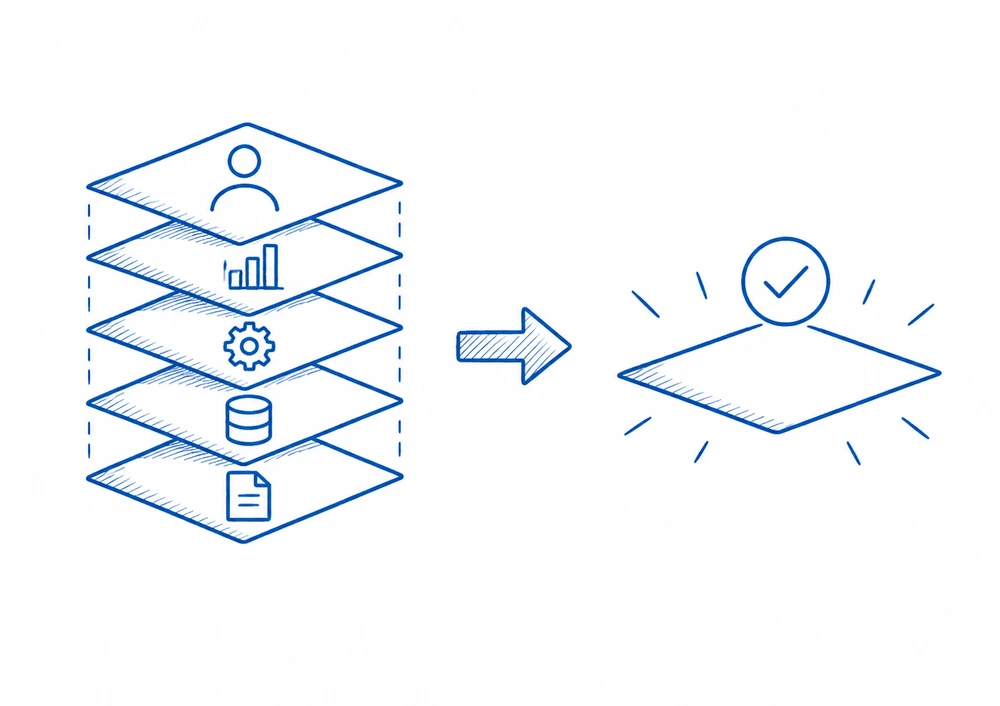
The goal of healthcare AI should not be to add more layers. It should be to remove unnecessary ones.
This shift affects patients too
Patients will probably not know which systems a clinic uses, but they absolutely feel when those systems are disconnected. They might have to repeat information multiple times, receive delayed or confusing billing information, or notice that their provider is focused more on documentation than conversation.
Connected operations create smoother patient experiences almost automatically. For example, digital intake flows into the visit, documentation supports billing correctly the first time, and scheduling, follow-up, and communication feel more coordinated. From the patient's perspective, things simply feel easier.
Where Beam fits into this future
Beam was built around the idea that healthcare operations work better when systems are connected from the beginning.
Instead of approaching intake, scribing, revenue cycle management, patient communication, and marketing as separate products, Beam connects them into a single operational workflow that works alongside the EMR.
That does not mean every clinic needs fewer capabilities. In many cases, clinics actually need more, especially if they're looking to expand. But the key is that these capabilities need to work together naturally. At that point, the whole becomes more valuable than the individual parts.
What healthcare AI will probably look like in five years
A few years from now, many current workflows will likely feel outdated. Not because the individual tools were bad, but because manually coordinating disconnected systems will feel unnecessary.
Healthcare teams will increasingly expect:
- Documentation that understands visit context
- Revenue workflows connected directly to intake and charting
- Patient communication that continues naturally across touchpoints
- Real-time operational visibility across the clinic
- Fewer administrative handoffs between teams and systems
In other words, healthcare AI will become less about isolated automation and more about holistic operational continuity. That is where the industry is headed and honestly, it is probably overdue.