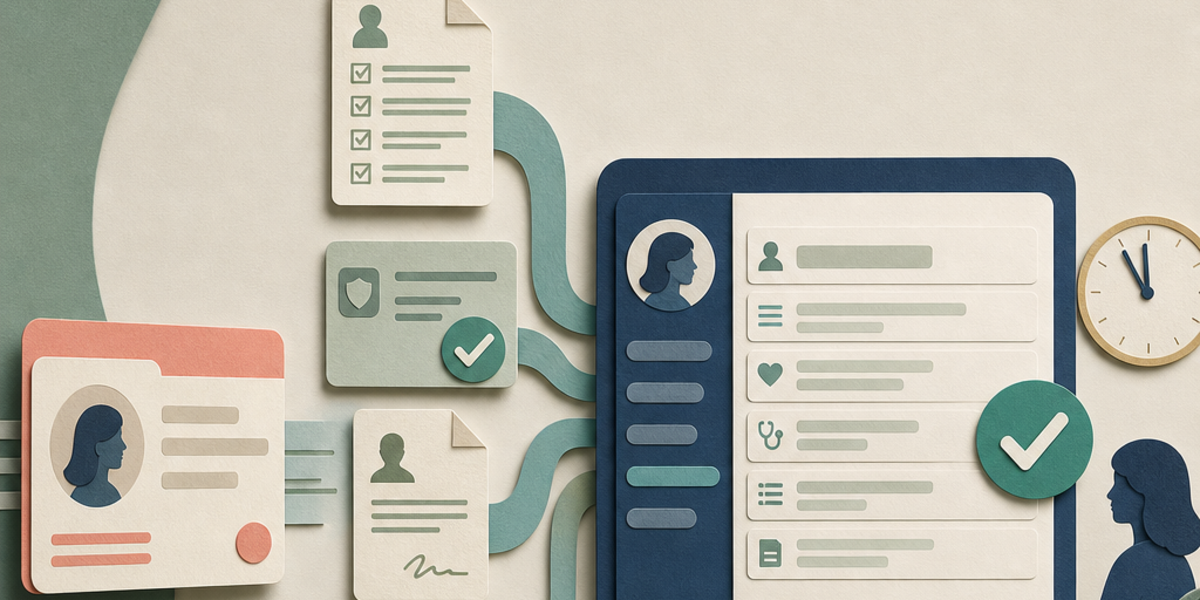
The patient checked in five minutes ago—yet the front desk is looking for the referral, checking whether the insurance card uploaded correctly, or the provider is opening old notes to remember what happened at the last visit. Meanwhile, the appointment is supposed to start.
Chart prep has traditionally been one of those quiet pieces of healthcare administration that happens in the background. Done well, nobody notices it. Done poorly, the effects show up everywhere: delayed visits, missing information, repeated questions, frustrated staff, and providers spending the first few minutes of an encounter searching instead of listening.
Automated chart preparation promises that when the patient arrives, the chart is already ready for them.
What actually goes into preparing a chart?
“Chart prep” sounds like one task, but depending on the practice and appointment type, staff might need to make sure demographics are current, intake forms are complete, insurance has been verified, referral documents are available, relevant history is easy to find, and the provider has the information needed for that particular visit.
Some specialties add even more steps. A follow-up appointment may require reviewing previous treatments. A referral may need outside records. Another visit may depend on specific forms, imaging, labs, or authorization information.
The information exists somewhere. The frustrating part is getting the right pieces into the right place before the provider needs them.
Uploading documents isn’t the same as preparing a chart
This is an important distinction when comparing medical chart prep software.
What happens after a patient fills out a digital form?
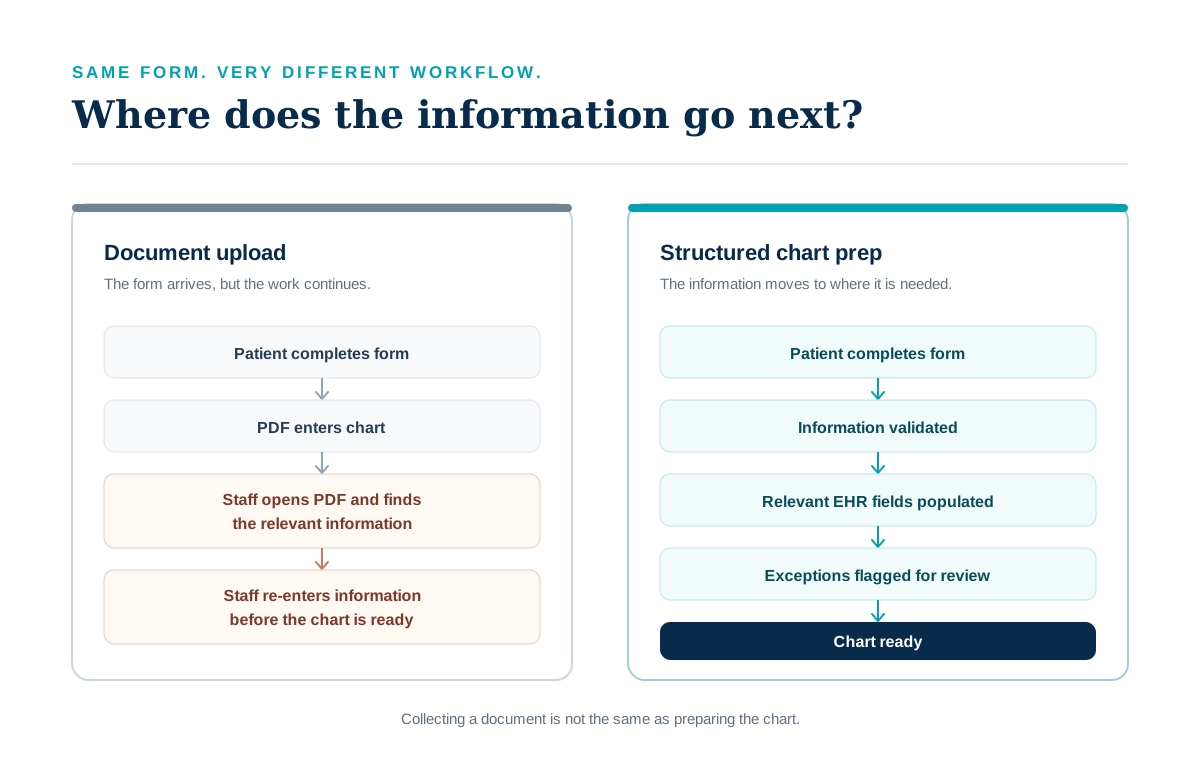
In a basic workflow, that form might appear as a PDF or attachment inside the patient’s chart. The information technically made it into the EHR, but a staff member or provider may still need to open the document, read it, and transfer the important pieces elsewhere.
That’s digital document collection, not automated chart preparation.
A more useful workflow can take the information collected before the visit and populate the appropriate structured fields in the EHR.
Patient enters information once → information arrives where the clinical team actually needs it.
A good system should know what’s missing, too
Automation works beautifully when everything goes according to plan, but that’s often not the case in healthcare.
Maybe the patient skipped an important field. Their insurance is inactive. A member ID doesn’t match. A referral document never arrived. The information they entered conflicts with something already in the chart.
The goal of pre-visit planning software is to identify when those gaps happen. Instead of staff manually reviewing every chart to discover which five have problems, software can prepare the routine charts and surface the ones that actually require attention.
Eligibility belongs in chart prep
Insurance verification often lives in its own little universe, but whether a patient’s coverage is active is pretty relevant information before an appointment begins.
Automated chart preparation can bring eligibility into the pre-visit workflow itself. Coverage can be checked before the encounter, and exceptions such as inactive insurance, changed coverage, or invalid member information can be surfaced while there is still time to address them.
That matters for the front desk, for billing, and for the patient who would probably rather hear about an insurance problem before receiving care than several weeks later.
The provider needs context, not a scavenger hunt
There is also a clinical side to chart prep. Providers need specific information before the visit.
Relevant prior history, recent encounters, referral information, outstanding care needs, and appointment-specific context can help a provider understand why the patient is there without digging through a chart full of unrelated material.
That makes AI particularly applicable to pre-visit planning. Instead of treating every piece of information in the record equally, software can help organize the context relevant to the upcoming encounter.
What should you ask in a chart-prep demo?
If you’re evaluating patient intake software, don’t stop at “Does it integrate with our EHR?” Ask the vendor whether it prepares the actual chart.
Ask what happens with an incomplete intake form, an insurance exception, where the referral ends up, which EHR fields can be populated automatically, and especially what happens when something doesn’t work.
A few questions reveal a lot:
| Ask this | What you’re really testing |
|---|---|
| Where does information from intake actually go? | Document storage vs. structured field population |
| Can eligibility be checked before the visit? | Whether insurance is part of the workflow |
| What happens when information is missing? | Exception handling |
| Can workflows change by specialty or appointment type? | Customization |
| How are outside documents handled? | Referral and record workflows |
| Can staff review or correct information? | Human oversight |
| What does the provider see when they open the chart? | Whether the system actually reduced work |
Where Beam fits before the visit
Beam approaches chart preparation as part of a larger intake workflow rather than a standalone document-organizing tool. Information collected during digital intake can be used to prepare structured information in the EHR. Insurance eligibility can be checked in real time. Relevant documents and pre-visit information can be gathered, while exceptions that need staff attention can be surfaced before the encounter.
Because Beam integrates with the practice’s existing systems, that workflow doesn’t require staff to abandon the EHR they already use. And the information prepared before the appointment doesn’t stop being useful once the patient enters the exam room.
The same structured context can support the encounter, documentation, coding, and eventually the claim. In other words, chart prep isn’t just about making the chart look tidy at 8:00 a.m. It is the first step in making the rest of the visit run better.
The best chart prep is the kind nobody notices
Patients probably aren’t going to compliment your medical chart prep software, but they will notice that they weren’t asked for the same information three times.
The front desk will notice fewer incomplete charts. The provider will notice that the information they need is already there. And everyone will notice when the appointment starts on time.
By the time the patient arrives, the work that could have happened beforehand already has.
The chart should be ready before the patient is.
Beam connects digital intake, eligibility, documents, and structured EHR data so routine charts can prepare themselves and staff can focus on the exceptions.
See how Beam prepares the visit